Manhattan Beach's Tree Ordinance Has a Blind Spot: The Arborist Reports to the Builder
September 10, 2026
September 10, 2026
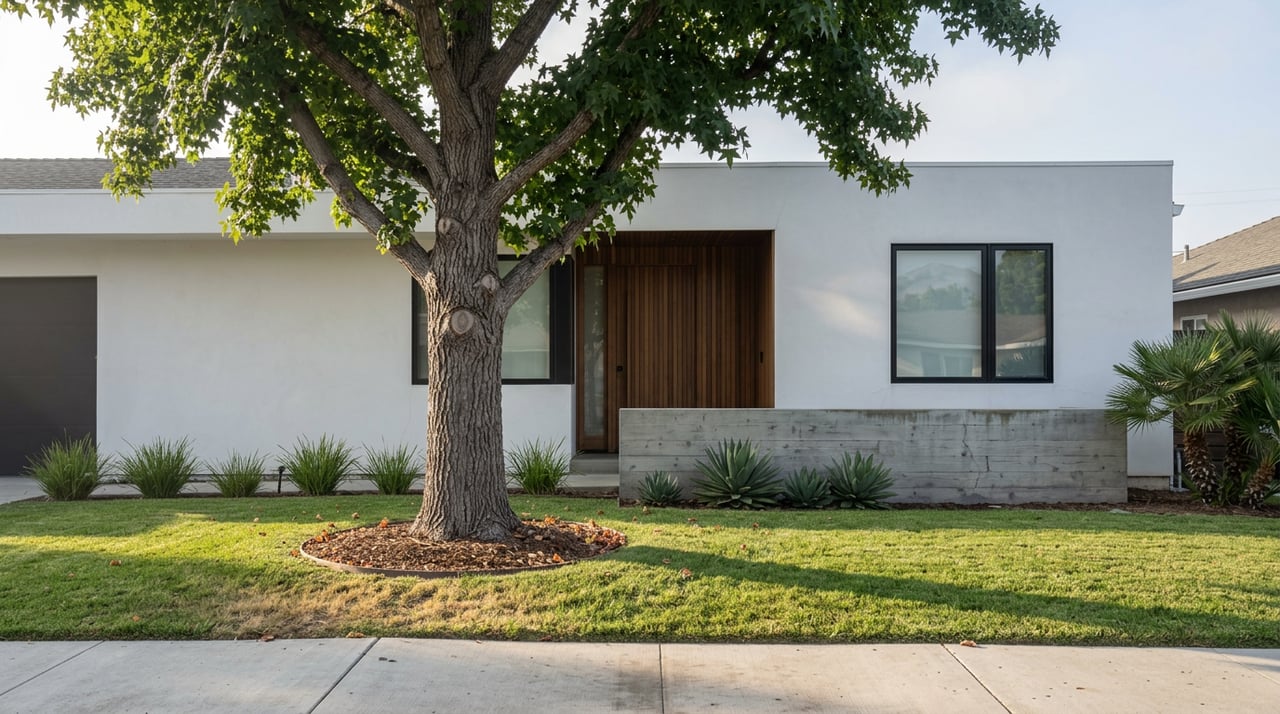
Sally Palm lived at her 9th Street address for more than 60 years. The sweet gum tree in her front yard was there for most of them, planted when the street still had the quiet, unhurried feel that longtime Manhattan Beach residents describe when they talk about what the city used to be. Palm died in 2024. Her property sold that May. A month later, a letter arrived for her neighbor, Gaston Moraga, informing him that the new owner's builder intended to take the tree down.
Moraga spent nearly two years trying to stop that from happening. He lost. In April 2026, the City of Manhattan Beach issued removal permits for the sweet gum and two other protected trees at 1823 and 1827 9th Street, after an independent arborist confirmed what the developer's own consultant had already found: construction had damaged the roots badly enough that the trees posed a real risk.
If you're evaluating a Manhattan Beach property with mature trees on it, whether you're planning to remove them to build or hoping to keep them because they're the reason you want the house, the Sally's Tree case is worth understanding in detail. It's not really a story about one tree. It's a story about who the city trusts to say whether a tree is healthy, and what happens when that person also happens to be working for the party that wants it gone.
Manhattan Beach's tree ordinance is often described as one of the strongest in the South Bay, and in terms of scope, that's fair. It started in 1993 covering only the Tree Section, where 9th Street sits, then expanded to every residential zone in the city in 2003, with fines and replacement requirements added in 2006 and further revisions in 2009.
But "citywide" doesn't mean "every mature tree on the lot." The ordinance protects trees in specific locations: the required front yard setback, typically 20 feet, and the corner side yard setback, typically 5 feet. A mature tree in the middle of a backyard, however old or however much shade it provides, generally falls outside this particular protection. If you're buying a property because of a specimen tree, the first question isn't how old it is. It's where it sits on the lot.
Here's the part of the ordinance that the Sally's Tree case exposed, and that most buyers never think to ask about. When a property with a protected tree is slated for construction, the arborist report that determines whether the tree survives is not commissioned by the city. It's commissioned by the applicant, meaning the property owner or their builder.
In this case, that was Thomas James Homes. The company's retained arborist, Peter Harnisch, an ISA Board Certified Master Arborist, inspected the sweet gum three separate times over roughly a year and a half. In August 2024, he identified it as a protected tree requiring preservation. By November 2025, after roots had already been cut nearby, he found the tree "might not have been adversely affected" and recommended further monitoring. When he returned in January 2026, the picture had changed: large roots had been severed within about 30 inches of the trunk, well inside the ordinance's own protection zone.
No independent arborist was sent out during that entire window. Under the code, that isn't the city's job unless something triggers it. What triggered it here was Moraga's sustained pressure over two years, plus a family-retained arborist of their own, Louis Gamino, who offered a softer but still cautious read: the tree might have been saved, but it carried risk. The city's decision to bring in a third-party reviewer at all was, by its own planning staff's description, something that hadn't happened during the entire construction period up to that point.
The lesson for a buyer isn't that developers are acting in bad faith. It's that the system, as written, relies on self-reporting from whoever has the most incentive to see the tree come down, and independent verification only shows up when someone fights for it.
Even when a violation is confirmed, the consequence is modest. The standard tree permit fee in Manhattan Beach is $300. When work happens before a permit is issued, the fee doubles to $600, plus a requirement to plant replacement trees. That's the entire financial consequence for removing a protected tree without prior approval.
Moraga put the number in context better than any regulation could. Referring to the homes going up on the block, he noted, "Those houses go for over five and a half million." A $600 fee against a $5.5 million sale is not a deterrent. It's a line item.
For comparison, other California coastal cities treat this differently. Palo Alto imposes civil penalties of $10,000 per tree, or twice the replacement value, whichever is higher, and requires stop-work orders for violations during construction. Santa Monica can levy fines in the tens of thousands of dollars and halt a project outright. Manhattan Beach's code does technically allow stop-work orders and after-the-fact fee doubling, but the dollar figures involved don't carry the same weight.
If you're under contract right now on a property with mature trees, or weighing an offer on a teardown candidate, it's worth knowing that the ordinance itself is under active discussion. Mayor David Lesser, who was on the council when the ordinance was last strengthened, said it was "troubling to learn about limitations" in it and signaled he's open to revisiting the rules. Community Development Director Masa Alkire, when asked directly whether the current penalty structure deters anyone, didn't push back on the premise.
Any legislative fix, whether that's higher fines, mandatory independent arborist inspections triggered by neighbor complaints, or something else, would require a City Council vote to amend the municipal code. Nothing has changed yet as of this writing, but a buyer planning a multi-year construction timeline should treat the current fee structure as something that could look different by the time their project is midway through permitting.
If you're buying a lot to build or substantially remodel, and there's a mature tree in the front or corner-side setback, don't assume your own project timeline is immune to the same slow degradation that happened on 9th Street. Root damage from nearby excavation or grading doesn't always show up immediately. It can take months, sometimes longer, for a tree to visibly decline after its root zone has been compromised, which is exactly the gap that let this situation stretch across a year and a half before anyone outside the project caught it.
If you're the one preserving a tree rather than removing one, the practical steps look like this: confirm with the city's Community Development Department whether the tree in question meets the ordinance's protected-tree definition, request the site plan showing tree locations relative to setbacks, and ask whether a Tree Permit has already been filed for the property, since that filing (or its absence) tells you where the project currently stands. For anything above the mid-six-figure to low-seven-figure range, commissioning your own arborist assessment before you remove contingencies is a reasonable cost given what's at stake if the seller's disclosures turn out to be incomplete.
And if your plans involve any grading, demolition, or new construction near a protected tree, know that a Tree Permit will need to move alongside any coastal development or right-of-way permits your project also requires. Treating the tree permit as an afterthought is how projects end up with the kind of timeline gap this case shows.
Does this ordinance only apply in the Tree Section? No. It started there in 1993 but has covered every residential zone in Manhattan Beach since 2003.
What actually happens if someone damages a protected tree without a permit? The city can require an after-the-fact permit at double the standard fee, mandate replacement trees, and issue a stop-work order while the violation is being resolved. It cannot, under the current code, impose the kind of five-figure civil penalties some neighboring cities use.
A mature tree on a Manhattan Beach lot can be a real asset or a real complication depending on where it sits, how it's documented, and how far along a construction timeline already is by the time you're evaluating the property. That's the kind of detail that doesn't show up in a listing photo, and it's exactly where local, hands-on guidance earns its keep.
If you're weighing a teardown, a remodel, or a home you want to keep exactly as it stands, trees included, Lisa Moule Realty can help you look past the curb appeal to what the lot actually allows. Schedule your South Bay consultation and let's go through the specifics together before you write an offer.
Stay up to date on the latest real estate trends.
Get assistance in determining current property value, crafting a competitive offer, writing and negotiating a contract, and much more. Contact Lisa today to discuss all your real estate needs!