Palos Verdes Estates Art Jury Risks Buyers Should Check
August 27, 2026
August 27, 2026
A Palos Verdes Estates homeowner named Jim Sheriff told ABC7's investigative unit in March 2026 that he was facing more than $10,000 in penalties tied to items installed on his property before he bought the home two years earlier. He hadn't touched them. He hadn't approved them. He just happened to own the house when the Palos Verdes Homes Association's Art Jury came calling.
That story gets told as a cautionary tale about a strict architectural review board. It's actually a much more useful story about escrow. Most guides to the Art Jury frame it as a hurdle for your future remodel: expect delays, budget for fees, hire an architect who knows the drill. All true. But if you're buying or selling in Palos Verdes Estates right now, the sharper risk sits behind you, not in front of you. It's the compliance history of a house you didn't build, inherited the moment title transfers.
The Palos Verdes Homes Association isn't a homeowners association in the way most buyers picture one. You don't opt in. You don't vote to join. If you buy a property within Palos Verdes Estates or the Miraleste neighborhood of Rancho Palos Verdes, membership and the obligation to obtain Art Jury approval for future exterior work transfer automatically with the deed. The Association's authority comes from deed restrictions recorded on the property back in 1923, and it governs roughly 5,500 properties across the two communities.
The Art Jury itself predates the city. Its first meeting was held in November 1922, seventeen years before Palos Verdes Estates incorporated as a city in 1939. That timing matters because it explains why the Art Jury and the city planning department operate as two completely separate systems today. The city checks structural safety, electrical, plumbing, and zoning. The Art Jury checks something the city has no legal authority over in most California municipalities: whether the outside of your house looks the way the original founders intended.
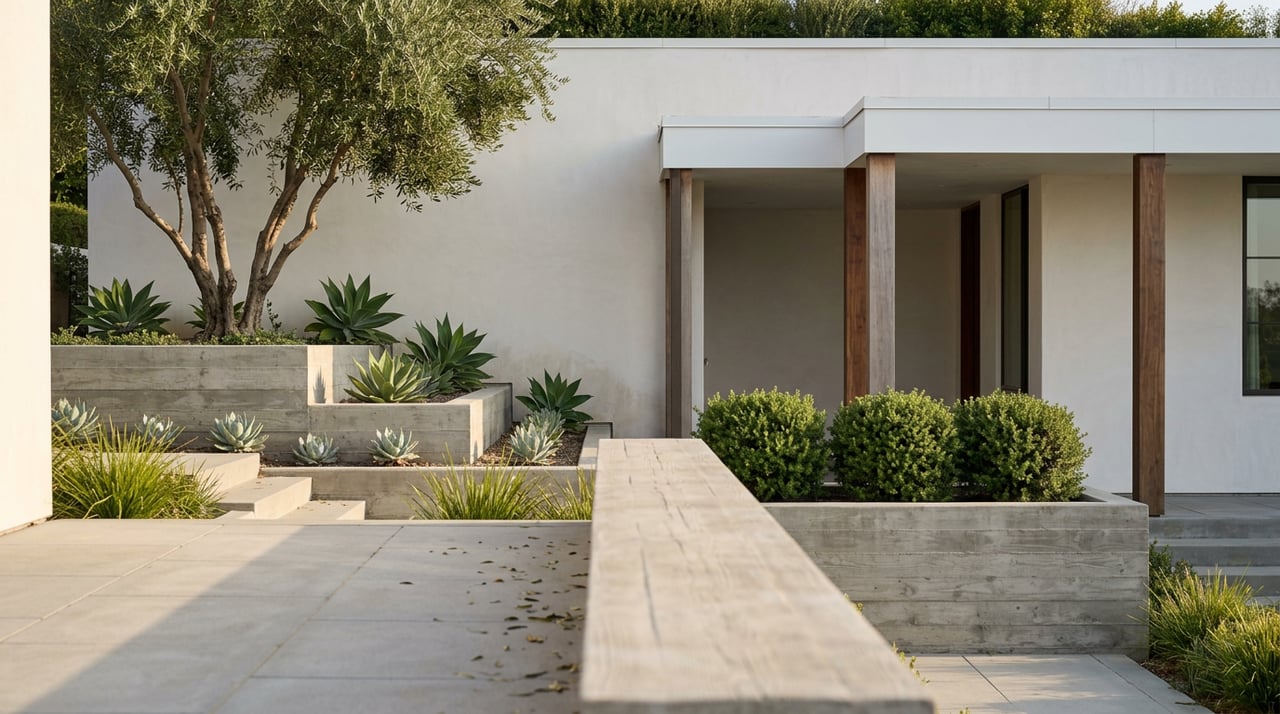
What counts as "outside" is broader than most buyers expect. New construction and additions, obviously. But also roofing and siding materials, windows and doors, fences and walls, hedges and landscaping, and even a repaint if the new color falls outside a previously approved palette. Interior-only renovations generally fall outside the Art Jury's reach, which is one reason the distinction matters so much at resale: a beautifully renovated kitchen tells you nothing about whether the exterior work down the hall was ever approved.
The Art Jury's first chairman was Myron Hunt, the architect behind the Rose Bowl, the original Caltech campus, the Huntington Library, and Malaga Cove Library itself, which opened in Palos Verdes Estates in 1930 and still stands on Via Campesina as a National Register landmark. In a 1927 essay for Pacific Coast Architect, Hunt described the goal of the review process as holding every structure to a standard of reasonable design and color, so that one badly built house couldn't drag down the value of everyone around it.
That's the founding logic, and it's worth understanding because it explains why the Art Jury still treats aesthetic compliance as seriously as the city treats a building code violation. The review board isn't a design-taste committee that fades in influence over time. It's a century-old enforcement structure with legal teeth, and Southern California courts have upheld those teeth more than once.
Anyone planning exterior work in Palos Verdes Estates is really running two separate approval processes at the same time, and they don't move at the same speed.
| Art Jury Review (PVHA) | City of Palos Verdes Estates Permit | |
|---|---|---|
| What it governs | Exterior design, materials, color, landscaping visible from the street or neighboring properties | Structural, electrical, plumbing, grading, zoning, and setbacks |
| Who administers it | The Palos Verdes Homes Association, a private body separate from city government | The city's own planning and building department |
| Typical timeline | Roughly 2 to 8 weeks for minor work; 3 to 9 months or more for additions, second stories, new construction, or grading | Runs on its own schedule, in parallel |
| Typical fees | $1,000 to $15,000 depending on project scope, paid directly to PVHA on a user-pays basis | Separate plan check and permit fees paid to the city |
| Can it be skipped | No. Approval is required in addition to a city permit, and it cannot be opted out of | No |
Neither approval substitutes for the other. A city permit doesn't satisfy the Association, and Art Jury sign-off doesn't satisfy the city. Homeowners who assume one covers the other are usually the ones who end up with a stop-work order or a compliance letter years later.
Here's the part that matters most if you're the one buying, not building.
Because Art Jury violations are enforced against the property rather than the person who caused them, an unresolved issue can sit quietly for years before it surfaces, and it often surfaces at the worst possible moment: during escrow, during a refinance, or when a new owner tries to sell. Unpermitted or unapproved exterior work can result in the Association placing a lien on the property, and that lien can cloud title for a future sale. A standard home inspection won't catch this, because it isn't a structural defect. It's a paperwork gap between what was built and what was ever formally approved.
The legal weight behind this isn't theoretical. In a 1986 California Court of Appeal decision, Palos Verdes Homes Assn. v. Rodman, a homeowner installed a solar water heating system after the Association denied the application. The court sided with the Association, ordering the homeowner to either bring the installation into compliance with the Art Jury's solar guidelines or remove it, and affirmed that the restrictions met the standard for reasonableness under California's Solar Rights Act. Courts have generally continued to side with the Association's authority to enforce its guidelines in the decades since. This is not a board whose rulings evaporate under legal pressure.
So the real question for anyone buying in Palos Verdes Estates isn't only "what will the Art Jury let me build." It's "what did the last three owners of this house build, and did anyone ever ask permission." A hedge that grew in a decade ago, a re-roof done by a previous seller in a hurry, a garage conversion nobody bothered to document. Any of it can become your problem the day you sign.
If you're buying, the Art Jury's records office at 320 Palos Verdes Drive West keeps files on nearly every structure in its jurisdiction, including original blueprints and construction drawings. During due diligence, it's worth requesting a look at those records for any property you're seriously considering, alongside asking your inspector to flag visible additions, balconies, fences, or landscaping changes that might not have a matching approval on file. The office is open limited hours (walk-ins are typically welcome from 9 to 10 a.m., closed to the public on Tuesdays), so this is not a same-day errand. Build the time into your escrow calendar rather than discovering the gap after close.
If you're selling, the more useful move is to gather your own Art Jury approvals, PVHA correspondence, and city permits before you list, not after a buyer's agent asks for them. A clean paper trail doesn't just avoid delay. In a market where buyers are increasingly aware of this exact risk, it's a credibility signal that separates your listing from one where nobody can say for certain what's actually approved.
Does the Art Jury review interior renovations? Generally no. Its authority is limited to exterior appearance, though any change that alters the exterior form, such as a new window opening or a second-story addition, will still trigger review even if the motivation was interior space.
If the city already issued a permit, do I still need Art Jury approval? Yes. The two processes are separate and both are required. A city permit alone does not satisfy the Association's requirements, and vice versa.
Can a lien from an Art Jury violation actually stop a sale? It can complicate one. A recorded lien or unresolved compliance issue can cloud title, which is exactly the kind of thing a title company and a buyer's lender will want resolved before closing.
Palos Verdes Estates rewards buyers and sellers who understand it isn't only a neighborhood of view corridors and Mediterranean rooflines. It's a place where the architecture itself is still governed by a body older than the city, and where the paperwork behind a house matters as much as the house. If you're weighing a purchase or preparing to list here, Lisa Moule Realty can walk through what a specific property's compliance history looks like before you're locked into a timeline you didn't choose. Schedule your South Bay consultation and get the full picture before you write the offer, not after.
Stay up to date on the latest real estate trends.
Get assistance in determining current property value, crafting a competitive offer, writing and negotiating a contract, and much more. Contact Lisa today to discuss all your real estate needs!