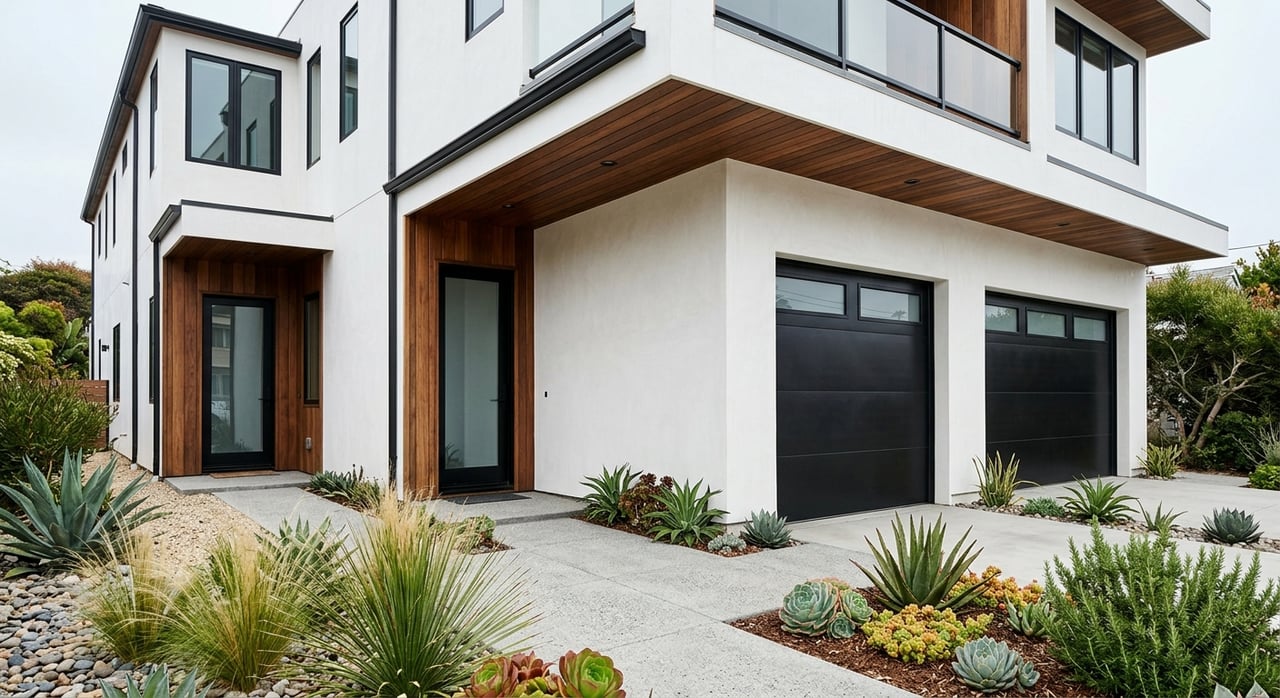
Redondo Beach Investment Property Guide for Duplexes & Fourplexes
May 14, 2026
May 14, 2026
If you have been eyeing income property near the coast, Redondo Beach duplexes and fourplexes probably stand out for a reason. They sit at the intersection of limited supply, strong rental demand, and a lifestyle location that continues to attract tenants who want beach access, commuter convenience, and well-kept housing. If you are thinking about buying, selling, or holding a small multifamily property here, this guide will help you understand what makes the numbers work, where to stay cautious, and what to look for before you make a move. Let’s dive in.
Redondo Beach offers a mix that many investors search for but do not always find in one place. It is a coastal South Bay city of about 68,075 residents, with two miles of coastline, King Harbor, and the Municipal Pier playing a central role in the local lifestyle and identity.
That setting matters because location helps support tenant demand. Redondo Beach also benefits from its position in the South Bay between LAX and the Ports of Los Angeles and Long Beach, an area tied to aerospace and related industries.
The local income and housing numbers also help explain why duplexes and fourplexes get attention here. Census data shows median household income at $150,245, median owner-occupied home value at $1,279,200, and median gross rent at $2,691, with owner occupancy at 53.4%.
For you as an investor, that points to a market where many renters may be willing to pay a premium for the right unit in the right location. It also means buying an entry-level income property can be a more accessible path than trying to acquire larger multifamily in a high-cost coastal city.
One reason small multifamily can feel competitive in Redondo Beach is simple: there is not an endless supply of it. The city’s housing element shows that 2 to 4 unit buildings made up about 13.2% of the housing stock in 2015 to 2019.
That is meaningful inventory, but it is not dominant inventory. By comparison, apartments made up 44% of the housing stock, while single-family detached homes accounted for 40.9%.
The city’s Objective Residential Standards make clear that duplexes, triplexes, and townhouses are established building types in local residential zoning. In the R-2 district, the city allows up to 14.6 units per net acre, while R-3 allows up to 17.5 units per net acre.
Those standards include examples like 2 units on a 50-by-150-foot lot in R-2 and 3 units on the same lot size in R-3. For you, that means duplexes and fourplexes are not unusual in Redondo Beach, but they are still a limited slice of the market, which can help support long-term demand and resale interest.
When you analyze a duplex or fourplex, rent data needs context. Zillow currently shows an average asking rent of $3,500 in Redondo Beach, while Census data puts median gross rent at $2,691.
Both numbers matter, but they measure different things. The Zillow figure reflects current asking rents, while the Census figure is a broader snapshot of occupied housing.
For underwriting, that distinction is important. If you rely only on current asking rents, you may overestimate income on a property with older leases, dated interiors, or units that do not match the condition of newer listings.
This is where a street-by-street understanding of Redondo Beach becomes useful. Unit mix, parking, condition, and proximity to key coastal amenities can all affect where a property lands within the local rent range.
If you are investing in Redondo Beach duplexes and fourplexes, cap rate expectations should stay grounded. The broader South Bay multifamily market offers the clearest benchmark available, with Northmarq reporting an average South Bay cap rate of about 5.75% in 2025.
That follows a much tighter range of roughly 3.5% to 4.5% from 2020 through 2023. The same report noted South Bay vacancy at 4.5% and asking rents at $2,321 per month, while also projecting more than 1,100 South Bay units for 2026 completion.
That new supply could keep rent growth more modest in the near term. For you, that means it may be smart to underwrite conservatively rather than assume aggressive rent increases will solve a thin deal.
Current Redondo Beach listings help frame the local range for smaller properties. Recent marketed examples included a 4-unit property at a 4.18% cap rate, another 4-unit at 4.26%, and a 5-unit at 4.66%, with one pro forma cap rate marketed at 5.91%.
A practical way to think about this market is low-4% to low-6% cap rates depending on location, condition, and upside. Prime coastal assets often trade tighter, while value-add opportunities may pencil out at higher projected returns.
A lot of South Bay multifamily inventory dates back decades, and that matters in Redondo Beach too. Northmarq reported that 2025 South Bay sales were weighted toward Class C assets built in the 1960s.
That does not mean older properties are bad investments. It does mean you should budget carefully for deferred maintenance, system updates, and turnover costs before you decide a deal is truly attractive.
In a duplex or fourplex, a roof issue, old plumbing, aging electrical, or worn exterior stairs can move your numbers quickly. Smaller buildings can be appealing because they are easier to manage than larger properties, but they still need a disciplined inspection and reserve strategy.
If you are comparing multiple options, it helps to look beyond the headline cap rate. A cleaner building with stronger in-place rents and fewer near-term repairs may outperform a cheaper value-add deal that needs more cash than expected.
Parking deserves more attention than many first-time multifamily buyers expect. Redondo Beach planning documents note that many areas have limited ability to widen streets because on-street parking needs to be retained.
That local constraint shows up in listings too, where garages and surface spaces are often highlighted as major selling points. In practical terms, parking can influence rentability, tenant retention, and overall appeal.
If two similar properties are priced close together, the one with easier parking may have the edge. In a coastal market where convenience matters, this is not a minor detail.
Redondo Beach rental demand is tied to both lifestyle and access. The city’s beach, pier, harbor, bikeways, and recreation resources are central to daily life and help support interest from renters who want a coastal setting.
The broader South Bay location also supports commuters and workers connected to large employment corridors. CBRE reported that Los Angeles County’s aerospace product and parts manufacturing industry employed 45,200 workers as of December 2024.
That gives the region another layer of economic support beyond the beach lifestyle alone. For landlords, this can translate into a tenant pool that values both location and function.
Longer-term rental demand can also come from households looking for stability in an established city setting. Redondo Beach Unified School District serves the city, which can be one factor in why some renters stay longer when they find a unit that fits their needs.
For Redondo Beach duplexes and fourplexes, California’s Tenant Protection Act is one of the most important legal frameworks to understand. The California Department of Real Estate notes that the law generally covers rental units in complexes with 2 or more units that are at least 15 years old.
The same guidance notes that a duplex where the owner occupies one unit is exempt. For covered properties, annual rent increases are limited to 5% plus CPI, or 10%, whichever is lower.
For you, this affects everything from underwriting future rent growth to planning lease administration. If you do not live on site, careful handling of notices, rent adjustments, and tenant communication becomes especially important.
That is one reason many investor owners value professional property management. Having a local resource who understands leasing, day-to-day operations, and investor priorities can help protect both the asset and your time.
If you are evaluating opportunities, focus on the factors that most often shape long-term performance:
A recent 5-unit marketed property in Redondo Beach included one 3-bedroom, 2-bath unit, one 2-bedroom, 2-bath unit, and three 2-bedroom, 1-bath units. That is a reminder that unit mix can vary, and each mix creates a different leasing strategy and rent profile.
Small multifamily investing in Redondo Beach is not just about spreadsheets. It is also about understanding which blocks feel more convenient, where parking becomes a bigger issue, how tenants respond to unit layout, and when a premium location justifies a tighter return.
That is where hyperlocal experience matters. In a market like the South Bay, details such as presentation, rental positioning, and realistic pricing can shape both acquisition decisions and long-term asset performance.
Whether you are buying your first duplex, selling a long-held fourplex, or deciding whether to keep and lease a property, it helps to work with someone who understands both the investment side and the lifestyle drivers behind Redondo Beach demand.
If you want help evaluating a duplex, fourplex, or other South Bay investment property, connect with Lisa Moule for a local, hands-on conversation about sales, rentals, and property management.
Stay up to date on the latest real estate trends.
Get assistance in determining current property value, crafting a competitive offer, writing and negotiating a contract, and much more. Contact Lisa today to discuss all your real estate needs!